
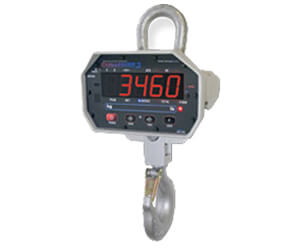
There is no shortage of industrial scales that can be found around the world, from hanging crane scales to bench and floor scales. While their uses vary, many of these scales fall into one of two camps: mechanical or digital.
Below, Accurate Scale will explore the fascinating ins and outs of mechanical and digital scales—and what you need to know to make an informed decision. Which is more durable? Which type typically requires more frequent scale repairs in Canada? Read below to scale up your knowledge.
What is a Digital Scale?
A digital scale measures weight via electronic load cells. Once an item is placed on the scale, the load cells convert this weight into an electrical signal, which is then displayed as a numeric value on the indicator. Generally speaking, digital scales are a newer design that many scale models have adopted, thanks to their ease of use.
What is an Mechanical Scale?
A mechanical scale works by measuring weight with several mechanical components. This is done by converting physical quantities through springs, levers, and other parts before displaying them on a dial and needle indicator. While analog scales were the initial iteration of many types of industrial scales, they continue to offer a tried-and-tested way to measure loads. Additionally, their basic construction can also make troubleshooting and scale repairs in Canada more straightforward.
How To Choose What’s Best For You
- Accuracy: While both mechanical and digital scales can offer pinpoint precision, analog scales are more prone to human reading errors, which may lead to incorrect values. On the other hand, digital scales typically provide greater readability thanks to their easy-to-read indicator. Regardless of the type of scale, regular calibration is key to ensuring your readings remain as accurate as possible.
- Durability: While both options can perform in demanding weighing environments, digital scales have more sensitive electrical components that require sufficient ingress protection, servicing, and scale repairs in Canada when needed. Analog scales offer simpler configurations, meaning fewer weak points.
- Features: Digital scales generally offer more robust features, thanks to the advanced technology that powers them. These scales can be tared, integrated with software, and even used with external displays. Analog scales, on the other hand, don’t typically come with as many bells and whistles.
There’s no right or wrong answer when it comes to choosing between an analog and digital scale.
That said, if you’re looking for advanced functionality, then a digital scale may be more beneficial for your operation. On the other hand, if you’re okay with simple yet dependable performance, an analog scale may be the smarter choice. At Accurate Scale, we offer both analog and digital scales across several categories, so you can choose the one that’s best for you.
Scale Up Your Accuracy with Accurate Scale
If you’re unsure between a mechanical and a digital scale model, that’s where we come in. At Accurate Scale, we’re a leading supplier of industrial scales, custom weighing software, calibrations, and scale repairs in Western Canada.
Since 1978, we’ve supported local industries with high-quality, made-in-Canada solutions. Ready to get started? Reach out to our team today to speak to a scale consultant.