
Though lab scales can weigh the most minute samples, not all balances are made for the same pressure. For those in the market for an industrial lab scale, you’ve likely heard of both top-loading and analytical balances—so how can you choose which of these two similar scales is best for your laboratory? What are the key benefits of each? How does it change who these scales are best for?
In this short blog with Accurate Scale, let’s examine the ins and outs of these two lab scales. Read on!
What is an Analytical Balance?
Analytical balances are highly precise devices, used to measure the smallest samples in a lab. These lab scales are notable for their distinctive design, with tall glass walls on each side to prevent disruption during weighing. Unlike top-loaded balances, these scales typically feature a door that must be opened, after which the sample is inserted onto the pan with an anti-draft ring. Typical capacity sits in the 50 to 300 gram range, with readability down to 0.0001 grams on some models.
What Is a Top-Loading Balance?
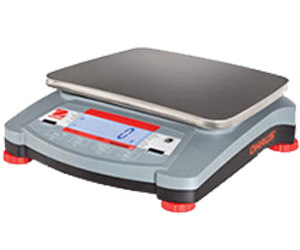
Just as its name suggests, a top-loading balance is a lab scale with the weighing pan mounted at the top of the unit.The indicator is typically found at the front of the scale, and unlike an analytical balance, there are no glass enclosures. Capacity ranges from a few hundred grams on small bench units up to 30 kg or more on larger production models.
Why It Matters
While this is helpful background information, what does this actually mean for everyday lab work?
Sensitivity
- Analytical balances are used to measure finer quantities than top-loading balances. These lab scales can weigh as low as 0.0001 grams, whereas top-loading balances are generally designed for measurements in the 0.01-0.1 gram range.
Application
- Due to their differing sensitivities, analytical balances and top-loading balances are typically used for different tasks.
- Analytical balances excel in measuring highly precise samples, such as pharmaceutical compounding, research experiments, and chemical solutions. On the other hand, top-loading balances may be used for weighing food ingredients, preparing samples, and performing routine quality control testing.
Key Accessories
- Many supporting accessories are typically compatible with both analytical and top-loading balances, such as protective covers, printers, and anti-vibration tables.
- However, analytical balances may benefit from precision-enhancing accessories, such as static eliminators and density-determination kits. In contrast, top-loading balances may offer greater usability with accessories such as larger weigh pans and spill trays.
So, Which Should You Use?
Before you decide to invest in a lab scale for your operations, ensure that you know how you’ll use it. For some, the decision really comes down to the smallest reading the work requires. For others, factors such as throughput must be considered. For example, a high-volume lab moves faster with a top-loading model that skips the draft-shield step between samples.
There is no shortage of high-quality lab scales to consider, such as the Rice Lake TE Enhanced series for top-loading applications or the Rice Lake Ohaus Adventurer Series for analytical use. Ensure you talk to a professional to narrow down your choices.
Find the Right Lab Scale with Accurate Scale
At Accurate Scale, we’re here to help you weigh out your options. We offer all-in-one support for all your weighing needs, from products and rentals to comprehensive scale software. Whether you’re outfitting a new lab or replacing an aging unit, our team can match the right balance to your workflow.
Reach out to us today to get started on finding the right scale for your operation.