
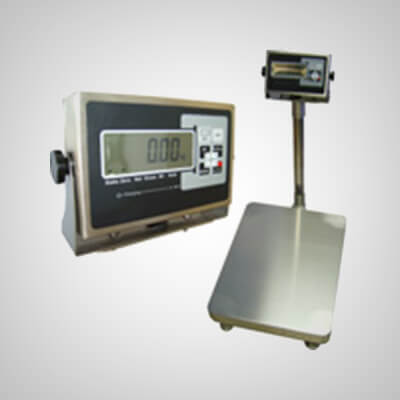
Whether a compact bench scale, high-precision lab scale, or a rugged portable truck scale, there’s one thing that all scales have in common: sooner or later, they’ll need to be calibrated. But when the hustle and bustle of day-to-day operations get in the way, how can you remember when it’s finally time for a professional calibration service? Fortunately, there are a few common indicators that can make the answer much clearer. From finicky readings to scale certification in Canada, let’s ‘tip the scales’ in your favour.
Below, let’s dive into some of the key signs your industrial scale likely needs to be calibrated. Read on to learn more.
#1: Readings Are Erratic
Perhaps one of the clearest signs it’s time to undergo a professional scale calibration is unstable or inconsistent readings. If your scale is sending you mixed signals, it may be because it’s no longer calibrated. You’ll also want to check whether the scale returns to zero after the load is removed.
When a scale is properly calibrated, its load cells are fully aligned with specific reference points and corresponding electrical signals. Over time, accuracy drift can occur due to mechanical stress, temperature fluctuations, relocation, or fatigue, causing these points to shift. As a result, readings may drift from the original reference points and vary from one measurement to the next.
#2: It’s Been Over a Year
There’s no magic number to tell you when exactly it’s time to undergo your next professional scale calibration. That said, at least one calibration per year is generally a good guideline in most cases. High-use environments may also require more frequent calibrations.
While many industrial scales offer built-in calibration modes, they are only supplemental. Annual professional-scale calibration is highly recommended and uses government-certified test weights to verify complete accuracy across the capacity range.
One year is also often when scale certifications of many kinds come up, which we’ll discuss more below.
#3: The Scale Has Been Repaired Recently
In many cases, repairs are a natural part of a scale’s lifespan and can help address common, easily remedied issues. That said, repairs of any kind can alter how the load cells signal to the indicator. Due to these microadjustments within the scale’s internal structure, professional calibration after a repair can help restore measurements to their original condition.
Similarly, calibration is often recommended if the scale has experienced severe overloading.
#4: You Have a Scale Certification Coming Up
While not an explicit warning sign, having a scale certification on the horizon is a strong sign that it may be time for another scale calibration. Contrary to popular belief, while calibrations and certifications are certainly related, they’re not the same. A scale calibration is the tuning process, whereas certification confirms that this accuracy meets the certification threshold outlined by Measurement Canada. As a result, a scale can’t pass certification without calibration.
In many industries, any scale that’s used for buying & selling must be Legal for Trade certified. While the exact certification requirements vary by industry, certification must be completed at specified intervals to maintain Legal for Trade status.
Weighing Solutions, Tailored to Your Business
Precise, consistent readings shouldn’t be left to chance. They should be maintained with regular, industrial-scale calibrations. Whether it’s routine maintenance or ensuring scale certification in Canada, Accurate Scale is here to help. We’re Western Canada’s reliable partner for end-to-end weighing solution support. Reach out to us today to learn more about our scale calibration services.