
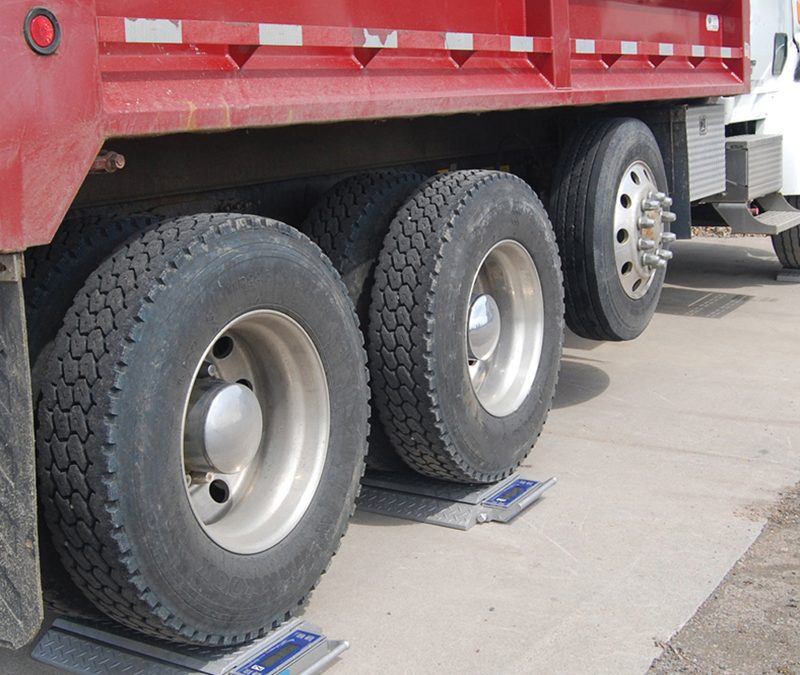
Wheel weigh pads have become a welcome tool for many, helping industries stay agile on the go, keep informed about load sizes, and remain compliant with regulations. For many businesses, these portable truck scales have become part of daily operations. But what can you do when harsh weather conditions make it difficult for portable truck scales to do their job? How can you identify what these conditions actually are?
While these environmental factors don’t necessarily hinder accurate measurements, they should still be considered for proper operation. In this short blog with Accurate Scale, let’s explore how to outfit your portable truck scale for common environmental considerations. Read on to learn more.
Ensure the Right Ground Conditions
Accurate weighing quite literally starts at the foundation. Ground conditions can significantly impact your portable truck scale. Uneven ground, loose gravel or dirt, and mud can all contribute to incorrect measurements. Take care to place your scale on hard, concrete, or metal ground that’s been washed down or swept of all debris.
Surface stability is a non-negotiable for accurate measurements. Make it a point to ensure the ground beneath the portable truck scale is acceptable before taking any measurements. Having a stable floor placement can also help minimize small movements caused by wind.
Store Equipment Properly
Portable truck scales are exactly that—not meant to sit in the same place forever. Once they are no longer needed, store the wheel pads properly. We recommend investing in a carrying case for fully protective storage when not in use. These cases do a fantastic job in protecting against dust and dirt contamination. Make it a point to also find a place to store away cables, indicators, and other accessories safely and properly.
Properly stowing away your portable truck scales keeps them free from dirt, debris, and other contaminants.
Control Moisture, Snow, and Dirt
As we all know, moisture and electronics aren’t fond of one another. It’s no different with wheel pad truck scales. Unlike permanent truck scales, wheel pad scales don’t typically have built-in drainage features. Instead, much of the water collected at the top of the scale drains naturally off the sloped sides, though not all of it. As a result, it’s crucial to ensure that moisture of any kind stays controlled.
Place your pad on an even, level area of the ground to prevent water from pooling at the bottom. Additionally, make it a habit to inspect around the scale before, during, and after use for any excess snow, mud, or water. If you notice any moisture, clean it off quickly.
Understand Temperature Drift
Thanks to their high mobility design, portable truck scales often move between storage, worksites, vehicles, and other locations. Naturally, these different locations have varying temperatures, which can affect performance and readings.
Portable truck scales and their components are largely made of metal. Metal naturally expands when warm and contracts when temperatures are cold. As a result, it’s essential to consider temperature when operating your scale. While small temperature swings may not seem significant at first, their impact on readings is often anything but.
Fortunately, temperature drift can be combated relatively easily. It’s best practice to ensure your scale is sufficiently acclimated before zeroing it out and taking measurements.
Weigh Confidently with Accurate Scale
Ready to up your roadside compliance, one truck at a time? That’s where we come in. Backed by nearly five decades of experience, Accurate Scale has delivered industrial weighing solutions to businesses across Western Canada. We’re your one-stop location for industrial scales, repairs, calibrations, and more. Contact us today to learn more about how we can help with all your industrial weighing needs.