
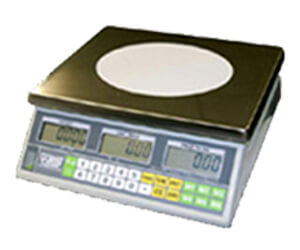
Lab scales offer some of the most precise measurements for a wide range of applications. From analyzing soil samples for field health to assessing product quality control, lab scales play a crucial role across many industries. But with this level of precision also comes the greater risk of complications and errors if the scale is \used or maintained improperly. So, how can you act proactively, maintain best practices, and correctly spot issues early?
Today, with Accurate Scale, let’s take a closer look at some of the most common issues that arise when using a lab scale. We’ll explore why these problems arise and how you can best address them. Let’s dive in.
#1: Consistent Overweights
If you’re consistently seeing measurements that are heavier than they should be, the first thing to check is that you’re correctly using the ‘tare’ function. Sample pans and containers are often extremely lightweight, weighing only a few grams. But lab scales are still highly sensitive and will detect this extra weight with ease. Many precision balance scales read up to 0.001 grams, while analytical balances offer a readability of 0.0001 grams.
Follow these instructions to use the tare function correctly:
- When taking a series of measurements, ensure that you’re using the same holding container type for each sample.
- Take an empty container and place it on the pan.
- Let the weight fully stabilize, then press the ‘tare’ or ‘zero’ function.
- Remove the empty container and add your first filled container with the sample.
- Repeat for all samples.
Depending on your sample, you can also use one empty container and add each sample one at a time. If using this method, ensure that each sample leaves no remnants and take care not to accidentally tare with the sample still on it.
#2: Environmental Drift
Environmental drift is the gradual shift in a scale’s display weight due to factors such as temperature, air movement, and electrostatic charges. Over time, the results shown on your scale’s display can inch up or down based on even the smallest changes in the lab scale’s external environment. For example, even the smallest temperature fluctuations can cause highly inaccurate or unstable measurements.
To combat environmental drift, ensure that your environment remains as controlled as possible. This includes wearing gloves when handling samples, maintaining a consistent temperature in the weighing area throughout the year, and ensuring that every sample reaches room temperature before weighing.
#4: Fluctuating Weight
While bouncing measurements can mean several different errors, one of the most common culprits is vibrations. Lab scales are highly sensitive to vibrations, thanks to their finely tuned internal components. But not all vibrations are treated equally, thanks to factors like frequency.
For example, analytical and micro balances will have more difficulty eliminating lower-frequency disruptions than higher-frequency ones. You may observe that low vibrations of 0.1Hz to 1Hz have a clear effect on the scale, with measurements constantly fluctuating. High frequencies, ranging from around 10Hz to 100Hz, on the other hand, are likely to result in less visual error on the display. This doesn’t mean that readings will still be fully accurate, though, as these micro-changes can still result in small errors that are not fully distinguishable on the display.
With this in mind, it’s good practice to remove any risk of vibrations and ensure that your lab scale is located in a highly controlled environment. Keep the lab scale located in a low-traffic area to minimize vibrations caused by footsteps, away from equipment with motors, and at a safe distance from HVAC systems.
Scale into Precision with Accurate Scale
Still seeing errors or conflicting readings? That’s where Accurate Scale comes in. We’re one of Western Canada’s leading scale suppliers, offering end-to-end scale support. Contact us today to learn how we can help you keep your lab scale functional, well-maintained, and precision-driven.