
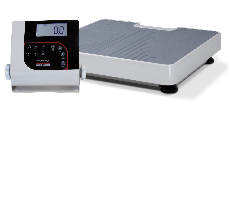
Lab scales are among the most commonly used scales in a variety of industries. From jewelry stores and chemical plants to agriculture applications and beyond, these scales serve a wide range of uses. If you’re in the market for an industrial-grade lab scale, continue reading with us here at Accurate Scale. With almost 50 years of experience manufacturing and supplying scales throughout Alberta, we’re your local scale experts. Let’s delve into the highlights together.
Understand Your Needs Before Buying
Before you decide to invest in a lab scale for your operations, ensure that you have an idea of how you’ll be using it. Here are a few questions to help guide your decision:
- What will you be measuring?
- How frequently will you be using the lab scale?
- How fine do you need to weigh? (grams, mg, etc.)
- What capacity will you need?
Once you’ve answered these questions, you’ll have more clarity in finding the right lab scale for you.
Choose the Right Scale Type & Capacity
While our lab scales are all built to the highest standards, they are not all built for the same applications. Lab scales all have different uses, with varying capacities of load and pan sizes. While an analytic balance may be beneficial for measuring samples of powders, it won’t be as accurate or useful for large beakers of liquid. Let’s take a closer look at some of the common lab scales below.
Types of Lab Scales
Precision Balance
- Precision balances are commonly used in applications needing to measure small to medium-sized quantities with precision. Despite not being as precise as analytical or micro balances, these scales are still highly accurate for a variety of loads—and also feature a wider variety of designs, including the popular top-loading design.
Analytical Balance
- Analytical balances are used to measure even finer quantities than precision balances. These lab scales can weigh as low as 0.1 to 0.01 grams, and often feature glass walls on each side to prevent disruption during the weighing process.
Microbalance
- Microbalances are among the most sensitive lab scales available, and are capable of measuring as little as 0.1 µg accurately. These lab scales are only used for applications requiring the utmost precision, and are typically fully-enclosed wth glass from every side.
Moisture Analyzer
- A moisture analyzer is used to measure the moisture content in a given material precisely. These lab scales use a built-in heating element and operate in three separate stages. This lab scale works by making an initial measurement of a sample, evaporating all moisture, and then re-weighing.
While these are the most common lab scales, there are other types also available. If the lab scale you’re looking for isn’t here, not to worry. Send us a message and we can help you find what you need.
Calibration and Compliance
Depending on your application, your lab scale may need to meet specific certification requirements. Many models are eligible for legal-for-trade certification, which also requires compliance with NTEP standards. At Accurate Scale, we provide full-service scale support for every lab scale. This includes comprehensive calibrations using government-certified weights.
See a Professional Scale Technician
There’s no shortage of lab-scale options on the market, with different capacities and application-specific designs. If you’re in the market for a lab scale, a professional scale expert like Accurate Scale can help you find the right one for your needs.
Precision Starts Here With Accurate Scale
Proudly Canadian and established in Alberta since 1978, Accurate Scale is your reliable partner for industrial scales, custom software, calibration services, and more. Start the conversation with us, or visit us at our Edmonton location to receive personalized, expert scale support today.